 Off-Highway Antifreeze Coolants
For anyone running a vehicle with an internal combustion engine (ICE), an antifreeze coolant is essential, but its job goes deeper than the name would suggest.
Internal combustion engines (ICEs), whether petrol or diesel, generate heat and are designed to run at an optimum temperature. If this temperature is controlled effectively, the engine will perform at its most efficient. However, an engine that overheats risks catastrophic failure. Conversely, if the engine has been at rest and exposed to low temperatures (below 0ºC), any water in the cooling system will freeze and cause internal damage. It’s for these reasons we need an antifreeze coolant.
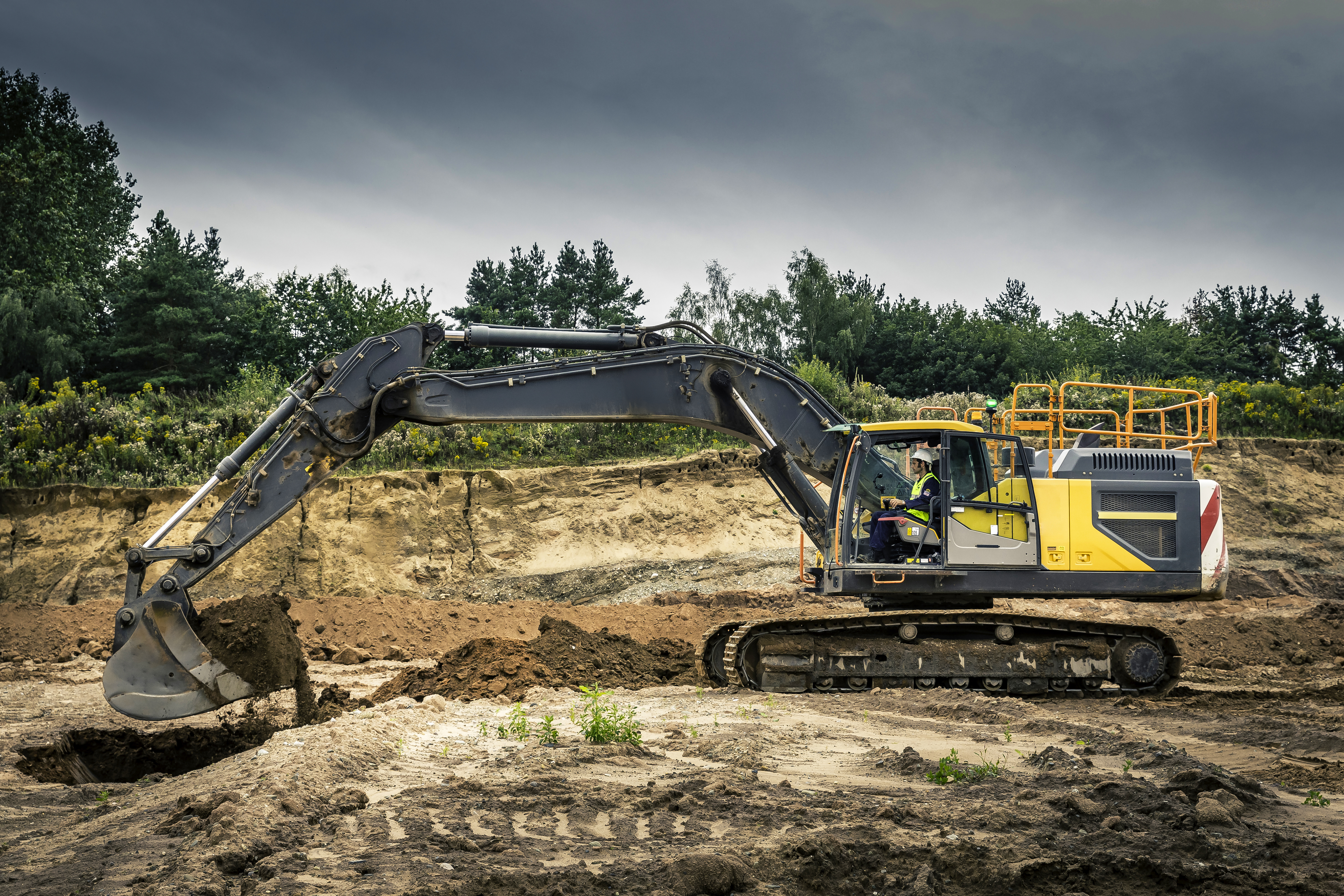
Off-Highway Equipment
For vehicles used in the off-highway sector, engine temperature regulation presents a big challenge due to the type of duty cycle they engage in. Unlike road-going vehicles that move at speed and generate additional cooling air flow through the radiator system, off-highway vehicles mainly experience short stop/start cycles and a lot of stationary operation. It's under these conditions, particularly if ambient temperatures are high and especially during the summer months, where overheating presents a real risk with the potential for equipment failure.
On the other end of the spectrum, and because of the type of workload this equipment is designed for, vehicles may be left overnight on construction sites, quarries, etc. and will experience a cold soak. This could be made worse in exposed environments when wind chill will drop temperatures even further. At extremely low temperatures, the likelihood of engine damage due to the formation of ice crystals in the coolant system is high. It’s under these arduous conditions that a correctly formulated antifreeze coolant, meeting the appropriate Original Equipment Manufacturers (OEM) specification, is essential to ensure the efficient operation of the engine and ultimately the vehicle overall. This is even more important because, unlike road-going vehicles that move at speed and generate additional cooling air flow through the radiator system, off-highway vehicles mainly experience short stop/start cycles and a lot of stationary operation.
Low Temperature Operation
The best cooling medium is water, as it readily absorbs heat. However, at 0ºC water freezes, turning from a liquid into solid. Ice is less dense than water and so as it freezes it expands. In the restricted spaces in the engine cooling system there is nowhere for the expansion to take place and so high internal pressures are generated with enough force to crack heads, cause splits in cylinder liners, burst hoses, etc. To combat this, monoethylene glycol (MEG) is used and added to the water. This reduces the temperature at which water freezes by disrupting the formation of ice crystals. Depending on the chosen mixture, for example 50% antifreeze coolant and 50% water, this freezing point can be driven down to -35ºC. For most climates this will provide plenty of protection.
High Temperature Operation
When the engine reaches running temperature, the area around the combustion chamber climbs rapidly and we start to exceed the boiling point of water, which is 100ºC. If the water boils away, the engine will overheat and in some cases, catastrophic damage can occur. Likely issues may be head gasket failure, problems with piston and valve timing, warped or bent con-rods or even crankshaft irregularities. The coolant system is pressurised to help stop water boiling, but to give it an extra helping hand, MEG takes on a different role and elevates the boiling point to an acceptable working level. Using our 50:50 example, as above, this will give us a value of around 108ºC (depending on the system).
The Balancing Act
So, if MEG is effective at low temperatures and high temperatures, why don’t we just use 100% MEG? Behind the scenes, there is a balancing act taking place. Water is the best coolant, but if you add too much MEG, its ability to carry heat away becomes impaired and the engine will overheat. However, if you don’t use enough MEG, the water will freeze at low temperatures. It is therefore vitally important that we get the levels right to maximise cooling performance and freezing protection.
Inhibitors
Another important function of an antifreeze coolant is to prevent any metallic components in the system from rusting or corroding. As we have already said, water excels at cooling, but it has a detrimental effect on metals, particularly at elevated temperatures. This is where essential chemistry is required, referred to as the inhibitor package.
The inhibitor package is a combination of different types of chemical compounds that are designed to give varying degrees of protection and may even be used to target more sensitive metals such as aluminium in certain water pumps for example. You may see the type of chemistry used referred to as inorganic or organic depending on the family of compounds used and the type of protection the antifreeze coolant is designed to offer.
In general, inorganic chemistry is extremely active and will seek out all materials in the system, whether susceptible to rusting and corrosion or not. Because it is very active and doesn’t discriminate, it becomes depleted after around 2 years and the antifreeze coolant solution should be changed.
Organic acid technology (OAT) only targets materials in the system that start to show signs of rusting and corrosion. This type of inhibitor system is selective and as such does not become depleted as quickly and can be left in the cooling system for up to 5 years. Some manufacturers may require a combination of these technologies and ‘hybrid’ antifreezes are available for specific engine designs.
Other Additives
In addition to the inhibitor package, other components may be added to improve the antifreeze coolant’s performance. Stabilisers are used to stop the inhibitor additives from dropping out, as well as compounds to prevent hard water deposits, pH buffering agents to maintain an optimum pH level and antifoam additives.
Colour
The final characteristic is colour. The language of antifreeze coolants tends to be based on their colour. But be aware, colour is not an indication of quality or performance. MEG itself is virtually colourless, but can be dyed a variety of colours to suit, including: blue, green, red, orange, yellow and purple. There are many others. However, it is important to remember that this is purely cosmetic and has no impact on how the antifreeze coolant performs in terms of engine protection.
Summary
Antifreeze coolants perform in the engine all year round and do not just cover the winter months when the weather gets cold. The correct antifreeze coolant mixture ensures maximum operational efficiency when the engine is running, preventing damage and ensuring the integrity of the system components. Off-highway equipment that may run for long hours in temperature extremes need this level of protection, and selection of an antifreeze coolant meeting the OEM’s specification is critical.
If there is any doubt as to which antifreeze coolant is required, check with the manufacturer or seek independent technical advice.
The Morris Lubricants’ Range Has You Covered
Morris Lubricants has developed the Ultralife range of antifreeze coolants to cover a broad range of off-highway vehicle engines and across a number of different manufacturers.
The Ultralife range is ideal for fleet managers, off-highway mechanics and technicians who are responsible for a variety of different vehicle technologies, OEM brands and vehicle models. Not sure which antifreeze coolant to select for your vehicles? There is no need to worry, you can seek help from Morris Lubricants and use the company’s WhatOil online oil, lubricant and functional fluid finder. Searches are easy, and by just entering a few details, you can see which antifreeze coolant is recommended for that vehicle.
Morris Lubricants also provides a wide range of oils, lubricants and greases for the other tough demands of the off-highway sector. Machinery, equipment and vehicles used in off-highway environments operate in extreme conditions, so their components need to be well-maintained. The Morris Lubricants’ off-highway range, including engine oils, gear and transmission oils, hydraulic fluids, greases, maintenance sprays and many more, is designed and manufactured to help ensure a vehicle's performance, efficiency and longevity. Further information about Morris Lubricants’ off-highway range of products can be found here.