Why Is Morris Lubricants’ New Ultralife Range Of Antifreeze Coolants So Good?
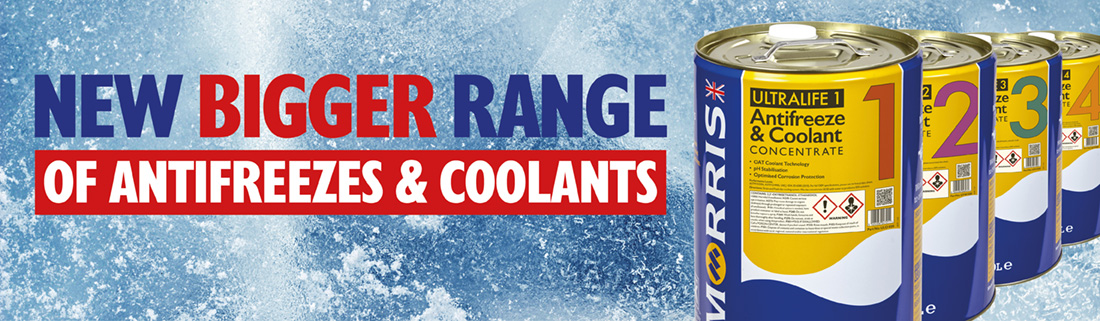
Morris Lubricants has upgraded its Ultralife antifreeze coolants range, increasing its coverage to 169 manufacturers’ specifications and international standards to cater for most vehicles and static engines used today. The new range is designed for more vehicles than the company has covered previously.
Ultralife antifreeze coolants cover a broad range of vehicle used in cars, vans, HGVs, trucks, buses, tractors as well as other agricultural and off-highway vehicles. This new range is ideal for fleet managers, dealerships and mechanics that are responsible for a variety of different vehicle technologies, engine types, OEM brands and vehicle models.
Adrian Hill, Technology Manager for Morris Lubricants explains the development of the new antifreeze coolant range:
“Traditional coolant specifications have relied on products using simple chemistry, typically with a two-year lifespan. As the metallurgies used in engine design continue to develop, alongside changing duty cycles, antifreeze coolant technology has needed to evolve in parallel, to help maximise engine protection as well as preventing freezing and overheating.
“Morris Lubricants has met this challenge head on, with the introduction of a newly improved Ultralife range of antifreeze coolants, providing protection at temperatures as low as -37° C across the entire portfolio.”
New antifreeze coolant range with added chemistry
The new range incorporates a variety of additive chemistries that are chosen to further enhance the performance and longevity of cooling system components.
These new antifreeze coolants are all based on organic acid technology (OAT) as opposed to old-style products that have used inorganic (mineral) chemistry for rust and corrosion protection. This older chemistry is very active and depletes over a two-year period.
In contrast OAT-based coolants offer much longer service life. The organic acids (carboxylates) only interact when the electrolytic process of corrosion starts to take place. As a result, this technology operates in a more selective way resulting in a longer lifespan of at least five years.
The older chemistry associated with traditional two-year antifreeze still has its place and some of its features can be used with new technologies to provide tailored protection, depending on the mixture of metallurgies used in the engine platform.
For example, silicates can be added to enhance the protection of aluminium, which is a dominant material used in engine construction. Phosphates may also be used to help control cavitation corrosion and maintain a good, slightly alkaline working pH.
These products that make use of a mixture of OAT and inorganic chemistry are referred to as hybrid antifreeze coolants.
Correct specification – don’t choose on colour
Antifreeze coolant is often selected based on colour, but this is purely cosmetic and plays no part in performance. Mixing different product types can be highly detrimental, so antifreeze coolant choice should always mirror OEM specifications to maximise protection and efficiency of the engine.
Adrian Hill concludes:
"Historically, antifreeze coolants may not have been viewed as integral to overall engine performance and longevity, but operators are now realising the benefits of investing in an antifreeze coolant that can contribute to improved efficiencies and reduced environmental impact. That's why we are launching such an extensive new range, providing optimised coverage.”
To view the Ultralife range of antifreeze coolants or if you need technical advice, please click here.
The new Ultralife products
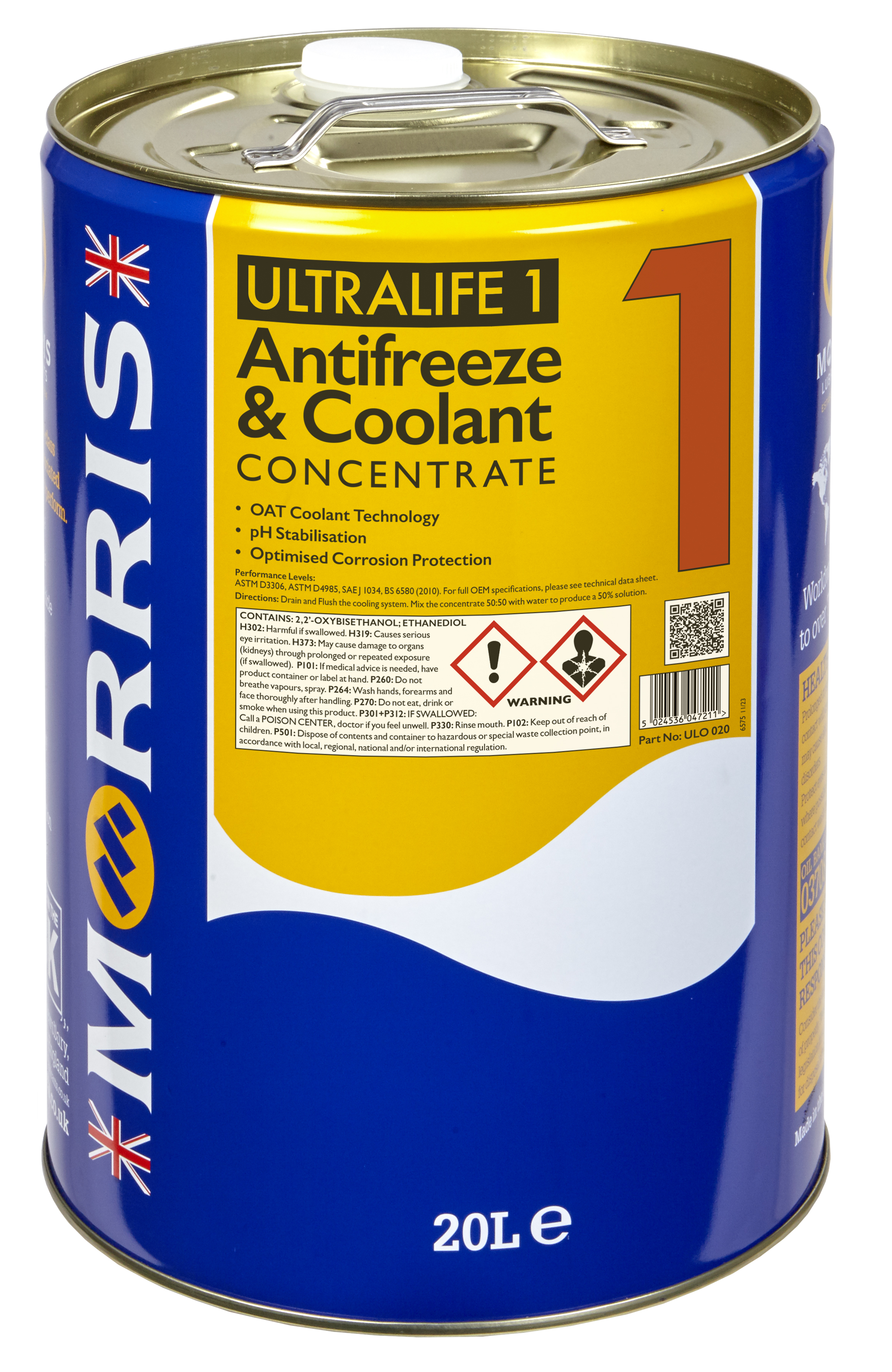
Ultralife 1 employs the latest OAT inhibitors and provides a wide specification profile for passenger cars, heavy trucks, coaches and buses and static engines, as well as for the agriculture and off-highway sectors. It is available in 5 litre, 20 litre, 205 litre and IBCs.
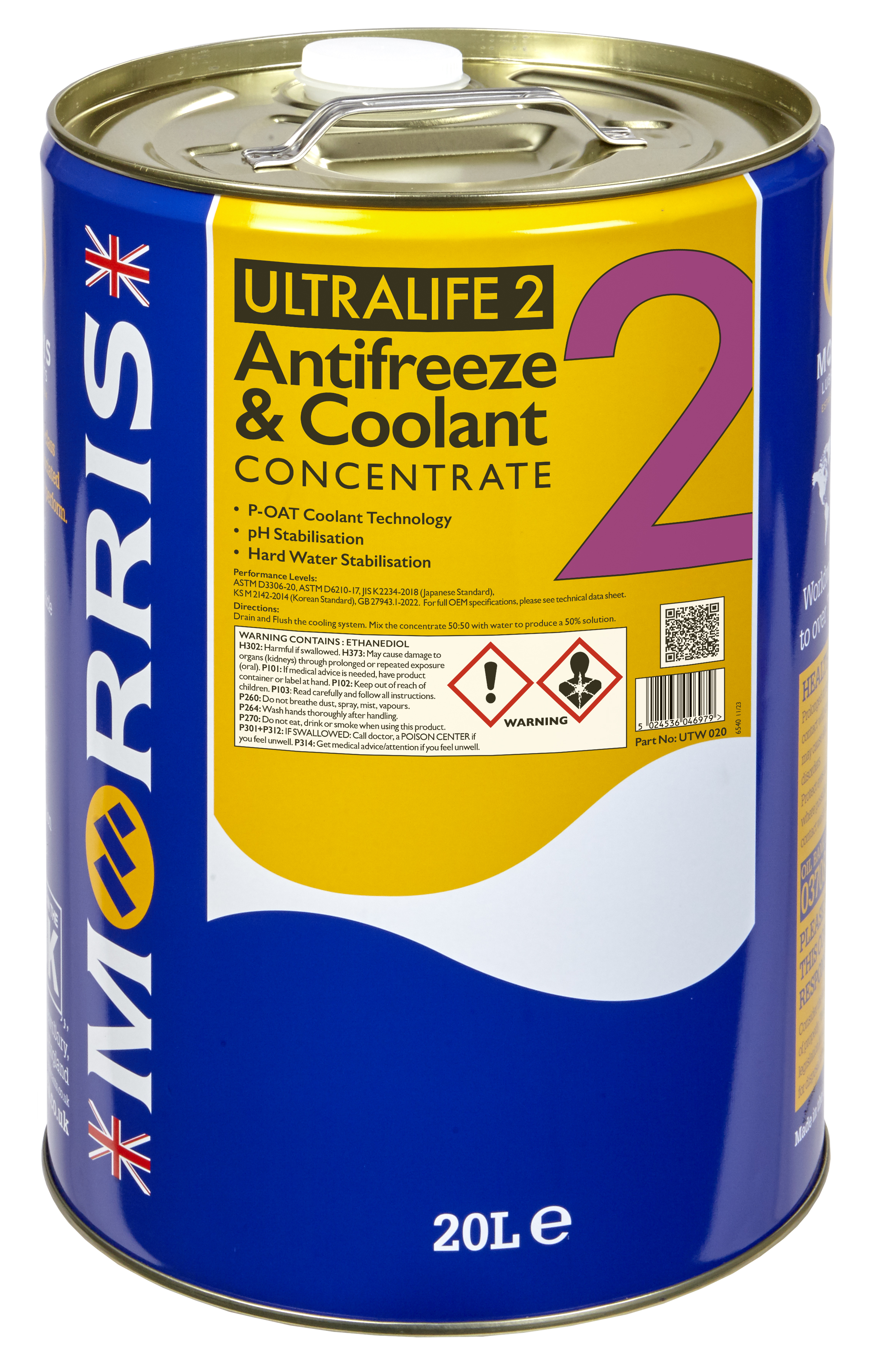
Ultralife 2 is hybrid antifreeze coolant with phosphate technology to manage cavitation corrosion and maintain pH level. It is preferred by Asian and some European passenger car OEMs to protect water pump seals for example, and is available in 5 litre, 20 litre, 205 litre and IBCs.
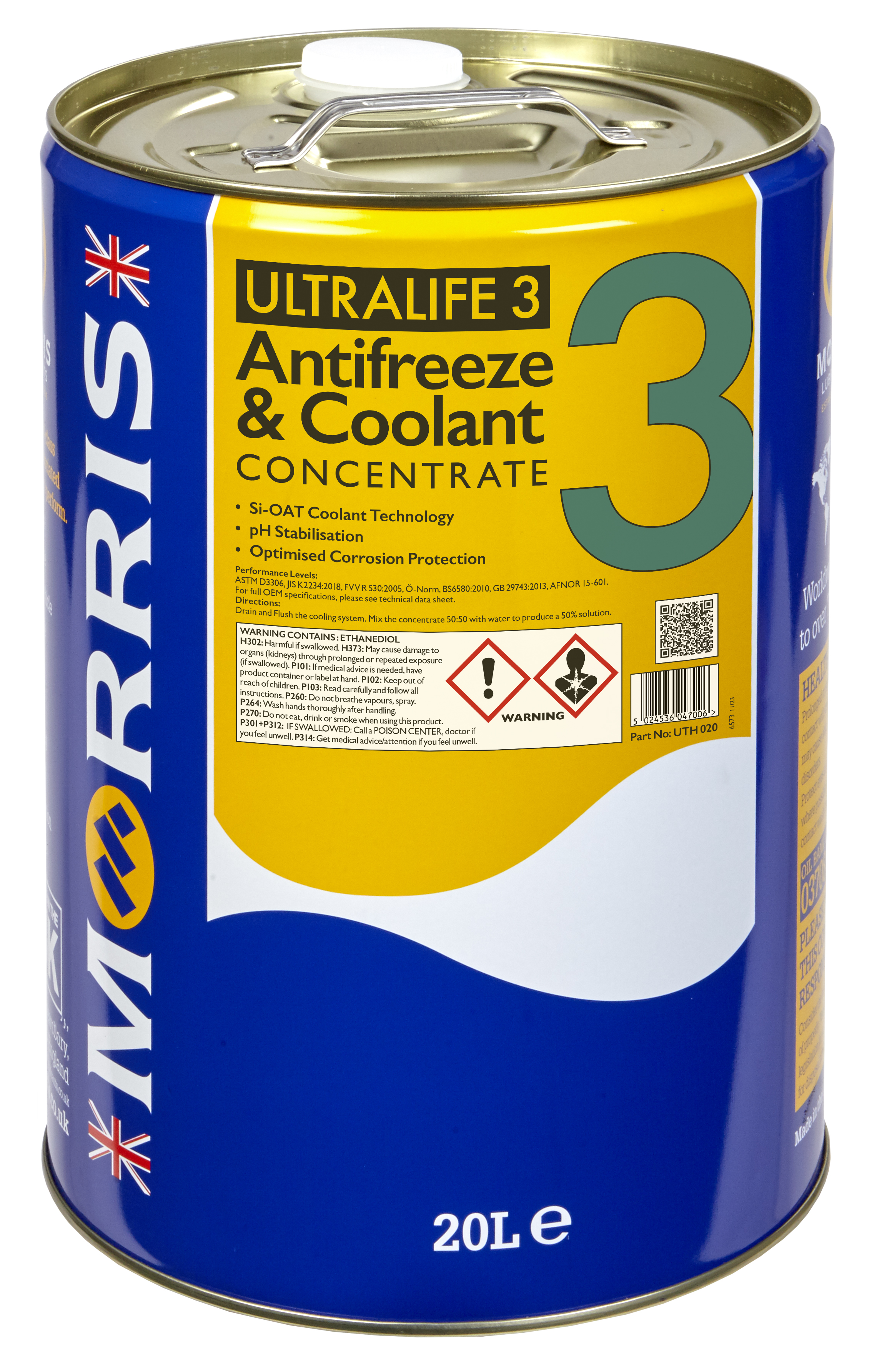
Ultralife 3 is a hybrid antifreeze coolant that uses silicate and phosphate technology to enhance corrosion protection and maintain pH control. It is preferred by German OEMs across the passenger car and heavy-duty sectors. Product sizes include 5 litre, 20 litre, 205 litre and IBCs.
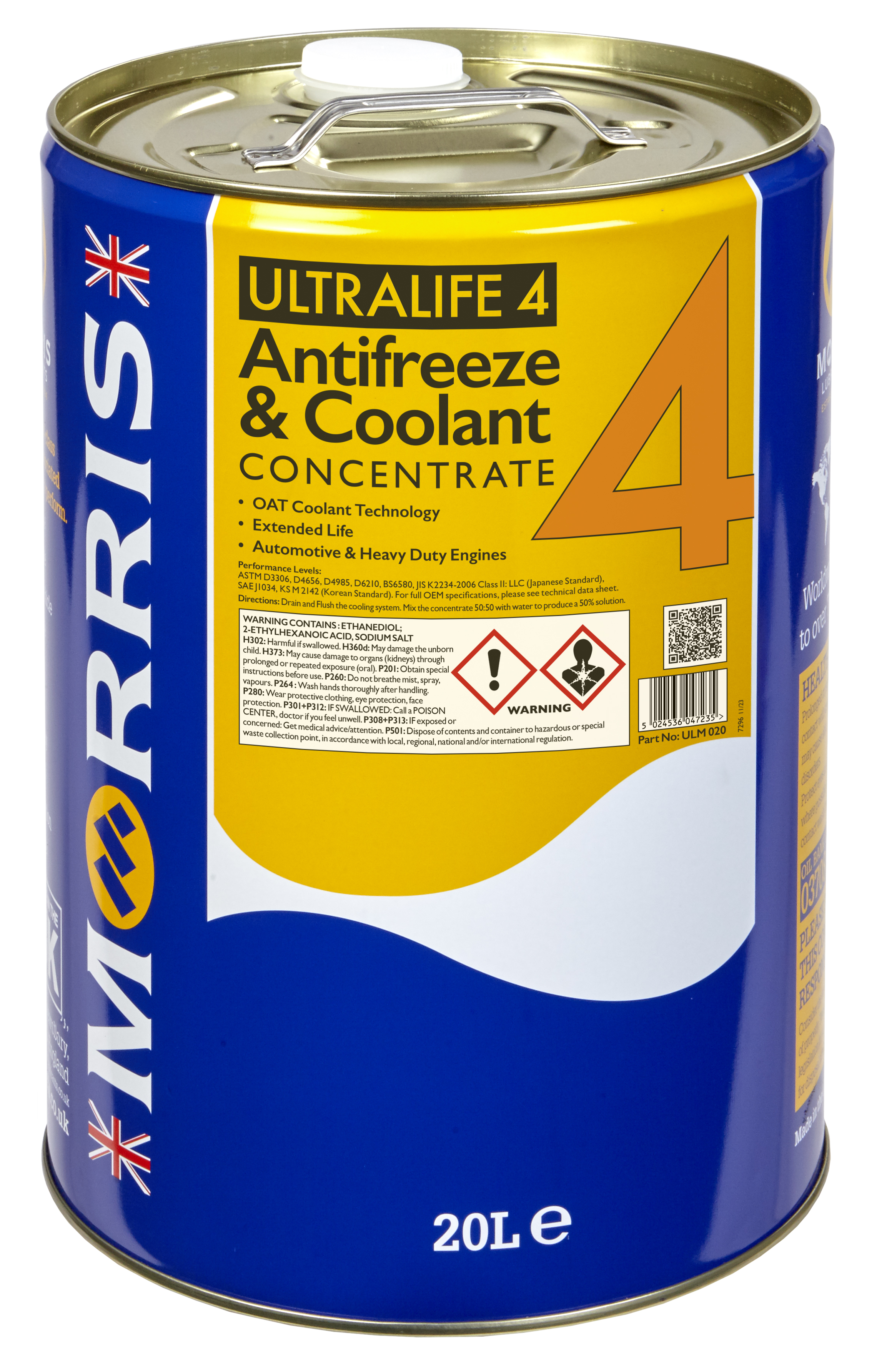
Ultralife 4 satisfies the needs of many OEM specifications across a broad range of market sectors in the professional workshop. With established OAT coolant technology, Ultralife 4 provides five years of engine protection under a wide variety of workloads and operating conditions. It is available in 20 litre, 205 litre and IBCs.
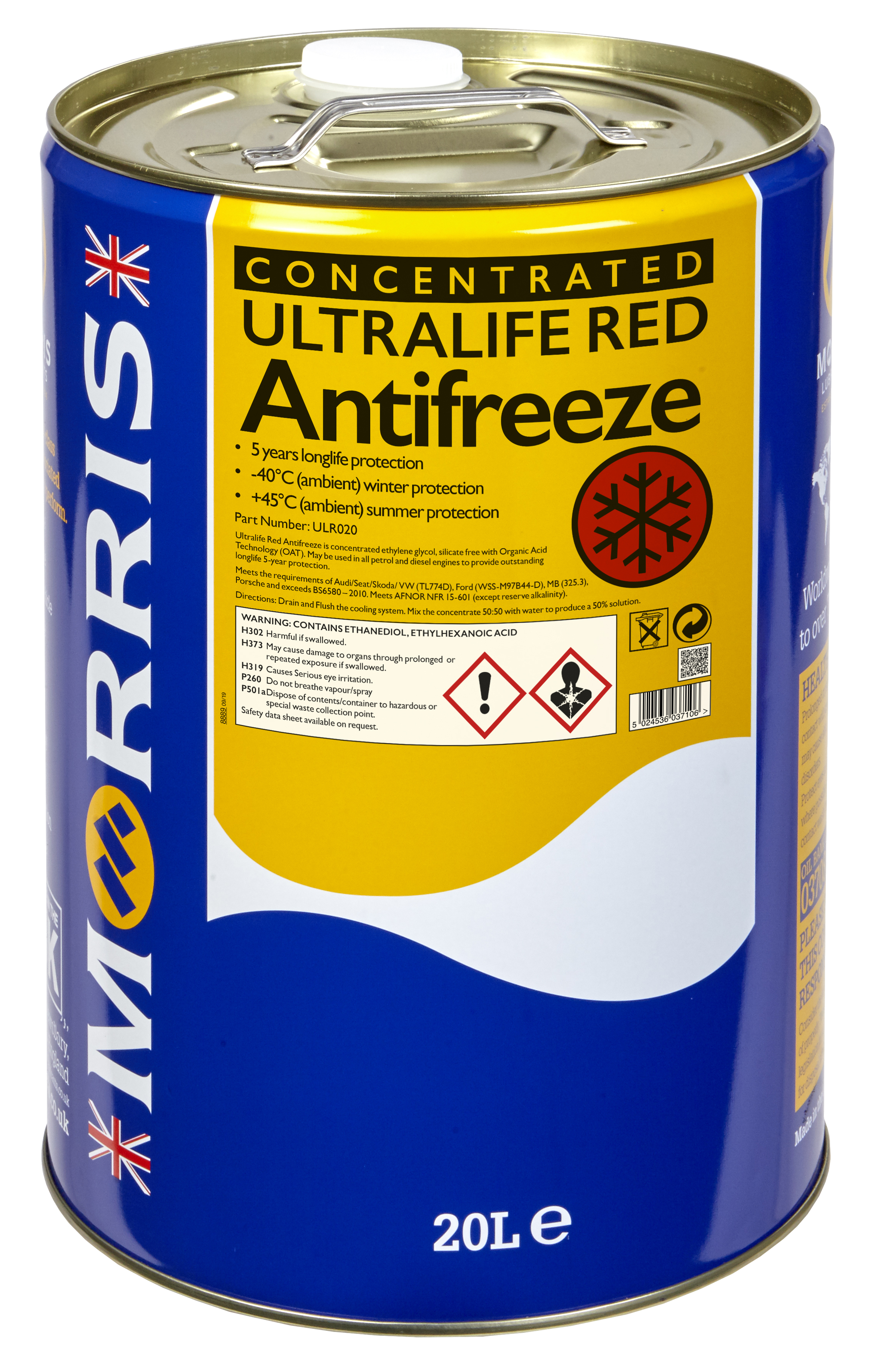
An entry-level, five-year antifreeze coolant using OAT technology with a basic range of specifications and standards across multiple market sectors. It is ideal for older vehicles and packages range from 5 litre, 20 litre and 205 litre and IBCs.
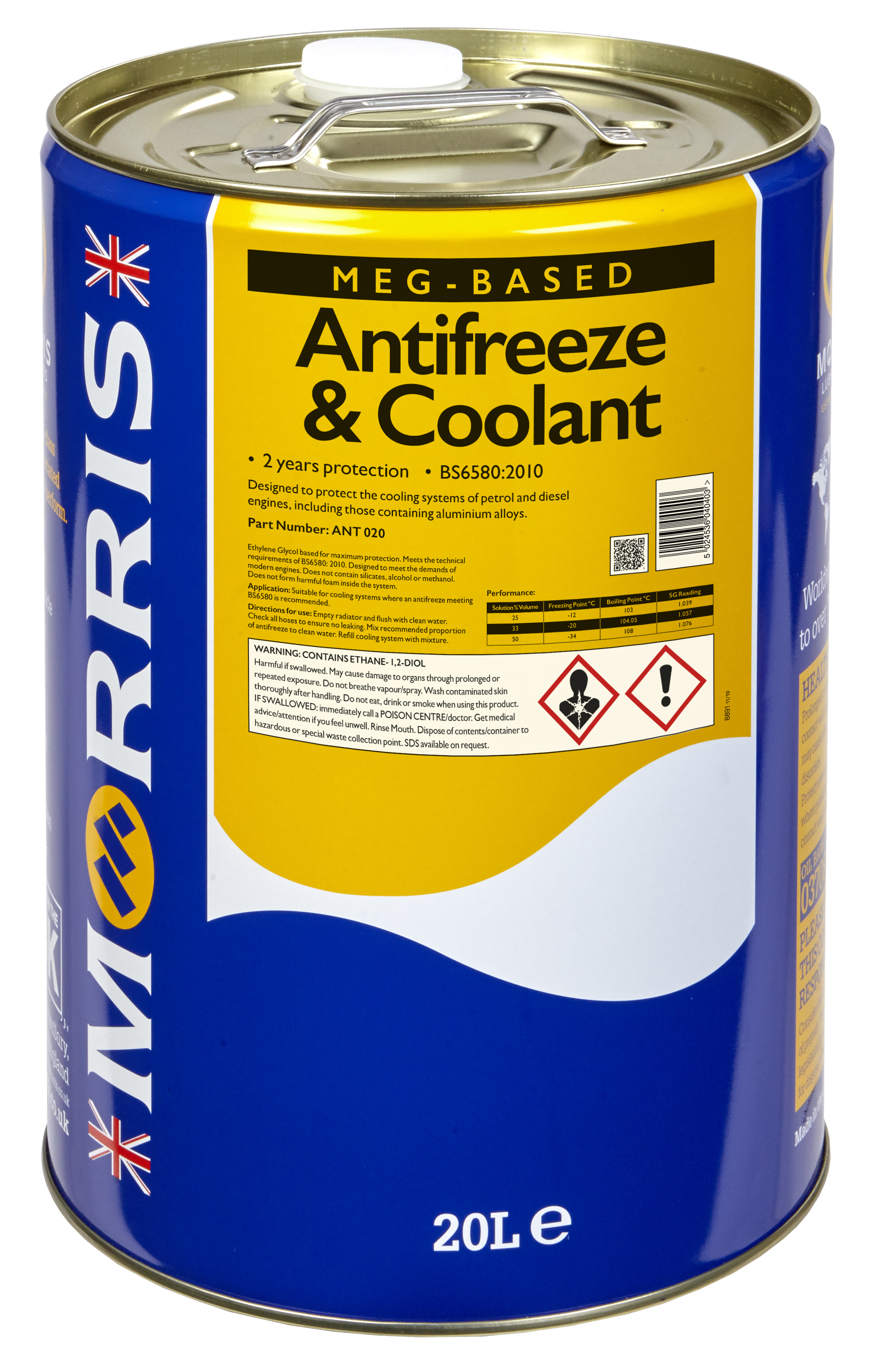
To ensure it can continue to service the needs of older vehicles that were designed to run on mineral-based antifreeze coolants, Morris Lubricants is retaining its two-year, MEG (Monoethylene Glycol) antifreeze coolant with mineral technology. It is available in 5 litre, 20 litre, 205 litre containers and IBCs.