Why Lubricants Are Part Of The Solution To Reducing Global Emissions
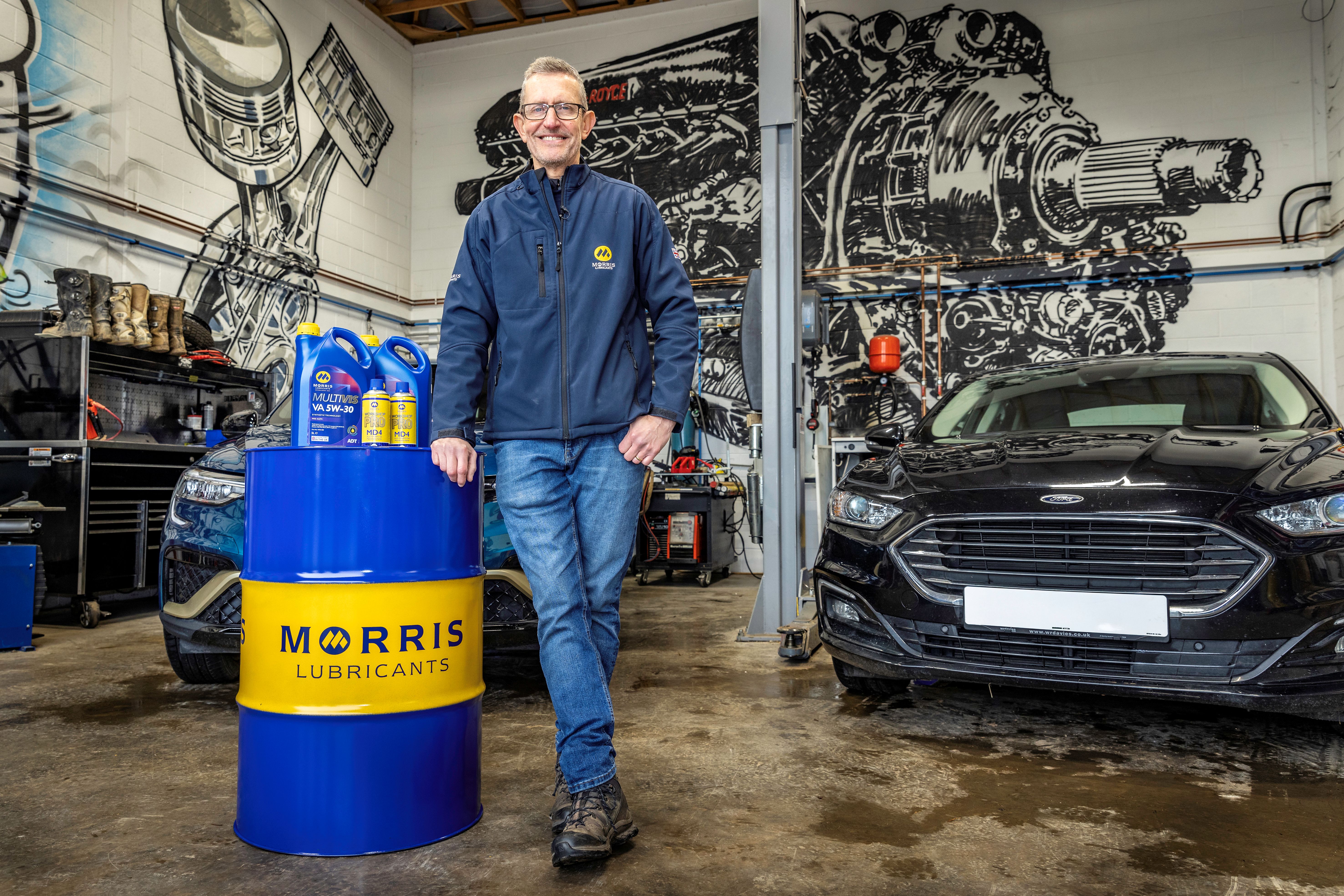
With over 40 years of experience in the lubricants industry, Adrian Hill, Technology Manager at Morris Lubricants, gives his insights on how the industry and its products support the reduction of vehicle emissions.
Why the preamble? Well, all these innovations and step changes to reduce emissions and make the world a cleaner place have relied upon the advancement in oil technology. It is a silent partner to the engineering advancements that grace us today and as we move forward.
I grew up in the days when diesel cars rattled like a bag of spanners and black smoke billowed out of their exhausts. Petrol cars used carburettors, a choke was needed to start them and exhaust pipes had nothing but a silencer. Choice of transmissions was limited; Manual Transmission (MT) gearboxes or Automatic Transmission (AT) gearboxes with a small number of gear ratios being the limited choice. These were for sure, less complicated days. The engineering was solid and robust, but refinement was going to be needed if future legislation on emissions was to be met and complied with.
Fast forward to today. The only time I see exhaust fumes coming from a car is usually when something bad is happening inside the engine and the end is nigh! Cleaner burning, efficient and quiet Internal Combustion Engines (ICEs) are now part of our everyday lives and in many ways are taken for granted. But getting to this position has been a long tough road, and the role of today’s lubricant manufacturers and the raw materials used has been silent but critical.
The hybrid car solution is still gaining momentum and they are primarily based on petrol engines. These smaller capacity petrol engines continue to be refined to make them as fuel efficient as possible. After all, the whole point of a hybrid is to maintain practicality but also reduce the vehicle’s carbon footprint.
Bigger is no longer seen to be the best, as roaring V8s and V12s are not commonplace on today’s roads. Petrol and diesel engines have reduced in size and although significantly cleaner burning than their early counterparts, diesels are in decline.
There are also fully Electric Vehicles (EVs) as another alternative for drivers and they pose a different solution to help reduce emissions.
In the full electric vehicle market, we have seen the adaption of transmission systems from their ICE counterparts, such as Dual Clutch Transmissions (DCTs) and Continuously Variable Transmissions (CVTs). Early models had the transmission as a separate compartment to the electric motor, but in newer designs they are now becoming integrated. The electric motor and transmission are one complete unit.
...innovations and step changes to reduce emissions and make the world a cleaner place have relied upon the advancement in oil technology.
Lubricant formulations are a balance of raw materials comprising of base oils and additive chemistry. Both have been on their own journeys through the years and refinement has been key to helping solve the issue of emissions.
Mineral oils were once the mainstay of engine and transmission oil formulations. The build tolerances of engines and transmission were nowhere near as precise as they are now, and the thicker oil films provided by mineral oil helped to seal, cushion and carry the load. But change was on its way and lubricants had to keep pace.
Modern engines and transmissions are built to a high level of precision thanks to new methods of manufacturing and the materials used. Fuel delivery has evolved to high pressure direct fuel injection systems that atomises the fuel more effectively, giving a more efficient burn. Ring packs have moved closer to the piston crown improving combustion further. Power output has been improved with supercharging and turbocharging. Newer, lighter build materials (such as aluminium alloys) have been adopted to reduce weight. Engine capacities have trended to smaller displacement. Tailpipe emissions are controlled with aftertreatment devices, such as Diesel Particulate Filters (DPFs), Gasoline Particulate Filters (GPFs), Selective Catalytic Reduction (SCR – AdBlue®) NOx reduction systems, Three-Way Catalysts (TWCs), Exhaust Gas Recirculation (EGR) and Diesel Oxidation Catalysts (DOCs). A huge list, and all these strategies add up to reduced emissions as well as making the engines more efficient.
Transmissions have also evolved to a high state of complexity and choice. Putting manual gearboxes to one side, as they require the driver’s judgement when it comes to gear changes, we have seen advanced designs that use computer control to maximise efficiency. Automatics can now have up to 10 ratios, a strategy that reduces the amount the engine revs drop between gears, resulting in better fuel efficiency. Dual Clutch Transmissions (DCTs) moved the lowly manual transmission into a whole new world, providing rapid gear changes and improvements in fuel efficiency. We have also seen Continuously Variable Transmissions (CVT) join the line up, using belts and cones to provide seamless and infinite gear ratios, again providing improved fuel efficiency. Of course, fuel efficiency equals reduced emissions, which is the ultimate end goal.
These new highly efficient ICEs and transmissions also need highly efficient and effective lubricants for them to work correctly. Base oil technology, the foundation for any lubricant, used to be a simple affair, but is now divided into five family groups (Group I, II, III, IV, V) as categorised by the American Petroleum Institute (API), each providing an increased level of performance. As demands on the lubricants have increased, more robust and tailored base oil technology has had to be developed to underpin these critical formulations. As we progress from Group I through to Group V, increased levels of molecular processing are introduced to refine their physical and chemical characteristics, resulting in highly sophisticated fluids. Oil formulations have moved to become more complicated chemical and manufacturing processes.
To make an engine more fuel efficient, lubricants that produce an ultra-low oil film now form part of the solution. Energy is expended whilst trying to move the lubricant around the engine, so if we can reduce ‘viscous drag’ we improve fuel efficiency. It is easier to move a thin oil around the engine than a thick oil.
Improved fuel efficiency translates into lower emissions, the desired end goal for these newer designs. The targeted areas are between the journal and bearings and piston and liner. But this requires advanced base oils that can cope with higher temperatures due to the ring packs being higher, without severe decomposition and evaporation loss. The same base oils have got to circulate at very low temperatures, down at -35ºC, in the new raft of 0W grades (0W-20, 0W-16, 0W-8). This is because fuel economy benefits need to start straight away on start-up. The oil film generated between journal and bearing is strong, but under high load may need reinforcing. This is achieved using polymers that are present in the oil formulation.
Rapid start circulation is another required feature of stop/ start operation, to reduce fuel usage. This is also highly critical in the world of hybrids.
Depending on the type of hybrid configuration, the internal combustion engine may have to start from cold and immediately find itself doing 70 mph.
The lubricant must be capable of being pumped from the sump to the critical valve gear and bearings in a blink, otherwise catastrophic wear will take place! Only the latest base oil technology and chemical additives makes this possible.
While all of these refinements in base oil technology have been taking place, the active additive chemistry has also been subjected to innovation. As highlighted earlier, the incorporation of aftertreatment devices (remember the long list) has helped control emissions, but they are sensitive to lubricant chemistry. The ‘wrong’ chemistry will block filters (such as DPF and GPF) as well as poisoning catalysts (such as SCR – AdBlue®). Here we have a difficult balancing act. The active chemistry must protect the engine components. It must control wear, corrosion, disperse soot, neutralise harmful acids, etc. But at the same time ensure aftertreatment devices enjoy maximum service life. It’s not an easy task!
The Original Equipment Manufacturers (OEMs) design the engines and transmissions and issue oil specifications or performance levels that are fine tuned to maximise component and service life. It’s these guidelines that are getting tougher to meet as OEMs continue to develop engines and transmissions that have the ultimate goal of maximum emissions reduction. The hardware will only achieve this if the correct advanced lubricant is used. Without the lubricant formulators playing their part, we would not be heading in the right direction in terms of reducing atmospheric pollution. Advanced lubricants are part of this solution.
It’s important to mention EVs and the role of lubricants. E-transmissions, whether DCT, CVT or AT, require lubrication. In early versions these systems operated as per their ICE counterparts, i.e. driven by a motor or battery in their own separate compartment. This made lubrication very straightforward. However, the new generation of e-transmissions have a requirement for the electric motor to be cooled. This is done by combining the e-transmission and the motor in one compartment, filled with the same fluid. This has required a step change in lubrication and industry tests have had to be developed to ensure any lubricant technology used is fully compatible with the electric motor components, particularly the copper windings. Only advanced lubrication chemistry and precise oil formulations can make this happen and keep the EV on the road.
It is imperative, that no matter how old the vehicle is, in warranty, out of warranty, low or high mileage, use of the correct lubricant meeting the OEM's requirements is a must - it is essential. The OEM performance level stated for that vehicle will provide the highest level of protection and efficiency, keeping it out of the workshop and on the road, maximising its life.
In summary, modern lubricants have evolved beyond the ‘dark gloop’ that they may have been perceived as once upon a time. Sophisticated refining practices, chemical processing and tailored additive chemistry has given rise to a whole new generation of lubricants. This new generation are critical components in the latest engine and transmission designs, ensuring that today’s vehicles live up to the clean credentials they are claiming to deliver
If you are unsure which oil will suit your needs, call the Morris Lubricants’ Technical Helpline on 01743 237541, or use the company’s WhatOil online lookup tool on the website at morrislubricants.co.uk, or speak to a member of our sales team on 01743 232200.